


Talent shortages, innovation demands, and social equity are three powerful reasons the world needs more women in STEM. Over the past decade, data shows measurable progress: female enrollment in STEM education has increased globally, and women’s participation in scientific research continues to grow. Yet this progress is far from uniform. While life sciences and health-related disciplines now show significantly higher female representation, women remain underrepresented in engineering, computer science, and senior leadership roles.
Understanding where gains are happening and where barriers persist is critical for educators, employers, and policymakers alike. This article explores twelve concrete ways the number of women in STEM is rising, highlights influential women leaders who are reshaping industries and research, and presents clear, up-to-date statistics you can confidently reference in content, presentations, or reports. Insights are grounded in data and analysis from organizations such as UNESCO, the National Science Foundation/National Science Board, the World Economic Forum, and leading professional STEM societies.
Leading Women Leaders in STEM: Spotlight

These contemporary leaders are not only advancing science and technology at the highest levels but also reshaping who participates in STEM. Their visibility, achievements, and advocacy help open doors for the next generation of women in STEM.
Jennifer A. Doudna – Biotechnology & Genetics
A co-inventor of CRISPR-Cas9 gene-editing technology, Jennifer Doudna revolutionized modern biology and medicine. As a Nobel Prize winner and biotech entrepreneur, she also plays a central role in shaping ethical frameworks for genome editing worldwide.
Why she matters: She proves that women can lead paradigm-shifting scientific discoveries while influencing global science policy.
Emmanuelle Charpentier – Molecular Biology
Emmanuelle Charpentier co-developed CRISPR-Cas9 and received the Nobel Prize in Chemistry for her work. Her leadership in molecular biology and infectious disease research continues to influence medicine and genetic science.
Why she matters: Her success highlights the global impact of women-led fundamental research.
Fei-Fei Li – Artificial Intelligence
Fei-Fei Li is a pioneer in computer vision and the creator of ImageNet, a foundational dataset for modern AI. She is also the co-founder of AI4ALL, a nonprofit dedicated to increasing diversity and inclusion in artificial intelligence.
Why she matters: She combines technical excellence with advocacy, ensuring AI innovation is both inclusive and ethical.
Frances H. Arnold – Engineering & Industrial Science
A Nobel Laureate in Chemistry, Frances Arnold developed directed evolution techniques used in pharmaceuticals, renewable energy, and sustainable manufacturing. She is also an influential voice in science entrepreneurship.
Why she matters: Arnold demonstrates how women can lead in engineering-driven innovation and commercialization.
Gwynne Shotwell – Aerospace Engineering
As President and COO of SpaceX, Gwynne Shotwell oversees complex engineering operations behind reusable rockets and commercial space missions. She is one of the most powerful women in applied engineering today.
Why she matters: Her leadership challenges stereotypes about women in aerospace and large-scale engineering.
Why these leaders are important for women in STEM
These women leaders increase visibility, influence funding and hiring decisions, and reshape cultural expectations about who belongs in STEM. Their success sends a clear message: women are not just participating in STEM, they are leading it.
12 Reasons the Number of Women in STEM Is Rising
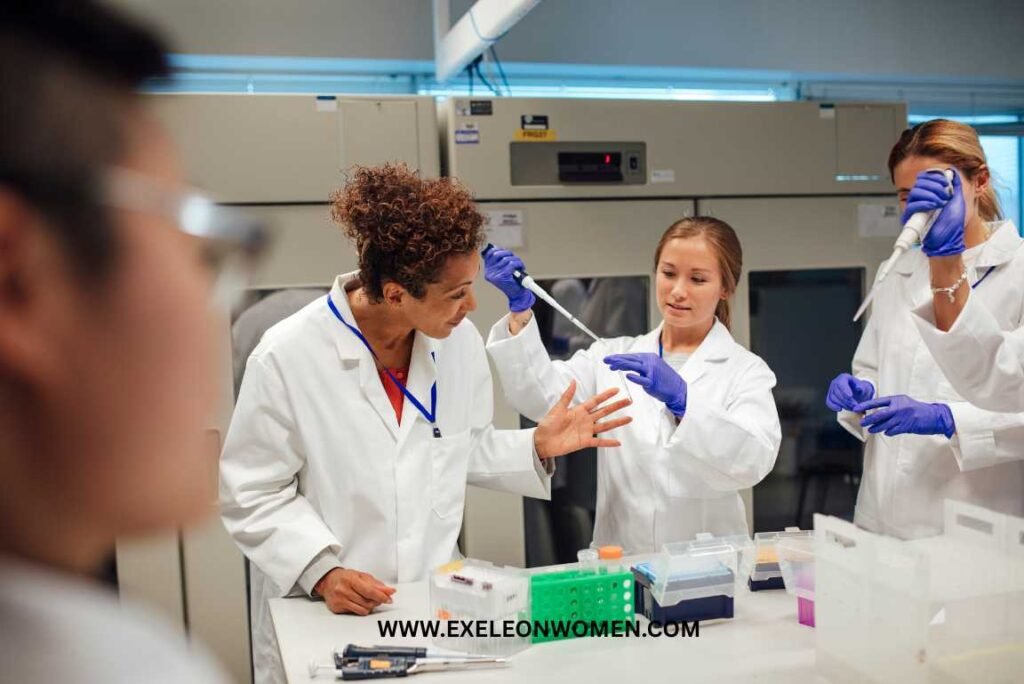
1) More women are graduating in STEM
What’s happening: Global tertiary enrollment data shows women now earn about 35% of STEM degrees worldwide, a steady increase over the past decade. This growth is expanding the talent pipeline feeding research institutions, startups, and technology-driven industries. Much of this progress is concentrated in life sciences, health, and natural sciences, while engineering and computing still lag behind.
What to do: Universities should connect scholarships and grants to industry placements, internships, and mentorship programs so higher graduation rates translate into long-term STEM careers, not short-term exits.
2) Growth in research participation
What’s happening: Women account for roughly one-third of researchers globally, marking a meaningful improvement compared to previous generations. However, representation varies widely by country and discipline, with women still underrepresented in senior research and principal investigator roles.
What to do: Funding bodies and institutions can accelerate progress by expanding gender-targeted fellowships, tracking promotion outcomes, and requiring gender-disaggregated reporting in publicly funded research programs.
3) Corporate diversity programs are shifting hiring
What’s happening: Large employers across technology, engineering, and life sciences increasingly set explicit diversity hiring and retention goals. Case studies show gradual but measurable increases in women hired into technical roles, particularly at entry and mid-career levels.
What to do: Organizations should make diversity targets public and measurable, monitor promotion and attrition rates, and pair hiring goals with formal sponsorship programs that support career advancement.
4) High-visibility role models and awards change aspirations
What’s happening: Nobel Prizes, major scientific awards, and sustained media coverage of women scientists such as leaders in gene editing, artificial intelligence, and biotech provide powerful role models. Visibility changes how young women perceive who “belongs” in STEM.
What to do: Schools, universities, and employers should actively showcase diverse women leaders, invite them into outreach programs, and highlight multiple STEM career paths beyond academia.
5) Targeted early-education interventions reduce stereotypes
What’s happening: Research consistently shows that gender stereotypes form early. Programs like girls-only STEM camps, updated curricula, and improved teacher training reduce early disengagement from math, science, and technology subjects.
What to do: Invest in hands-on, experiential STEM programs for middle- and high-school girls, especially in computing and engineering, where gaps emerge earliest.
6) Flexible work and returner programs improve retention
What’s happening: Flexible schedules, remote work, and paid returnships after career breaks significantly reduce attrition among women balancing caregiving and technical careers. These programs are especially effective in mid-career stages.
What to do: Employers should implement paid return-to-work programs, phased re-entry options, and sponsored upskilling to help women rejoin STEM without career penalties.
7) Reskilling and online learning expand access
What’s happening: Online courses, certifications, and bootcamps have lowered barriers to entry into fast-growing fields like data science, cybersecurity, and AI. These pathways particularly benefit women who lack traditional STEM degrees.
What to do: Companies can subsidize targeted reskilling programs and link them directly to hiring pipelines, pairing learning with mentorship and real-world projects.
8) Sector growth favors fields with higher female representation
What’s happening: Rapid expansion in biotechnology, health technology, and data analytics fields that historically attract more women has increased women’s overall share of STEM employment.
What to do: Align recruitment strategies with high-growth sectors, expand internships, and build partnerships with universities in life sciences and applied data fields.
9) Policy-level supports improve retention and advancement
What’s happening: Countries and institutions that provide childcare support, parental leave, and family-friendly grant policies see higher retention and promotion rates for women researchers.
What to do: Advocate for inclusive research policies, including grant extensions for parental leave and childcare funding tied to conferences and fieldwork.
10) Intersectional data and programs are becoming more common
What’s happening: Organizations are increasingly collecting data by gender, race, disability, and socioeconomic background. This enables more targeted interventions and exposes where progress is uneven.
What to do: Publish disaggregated data and design programs that specifically support the most underrepresented groups among women in STEM.
11) More women are entering leadership pipelines slowly
What’s happening: Leadership development initiatives focused on mid-career women are producing more female technical managers and research leaders. However, representation drops sharply at senior and executive levels.
What to do: Tie promotions to transparent evaluation criteria, introduce bias-aware review processes, and fund leadership fellowships and sponsorships for high-potential women.
12) New technologies create both opportunity and risk
What’s happening: AI, automation, and remote laboratories are creating new technical roles while also risking the reinforcement of bias in hiring and evaluation systems. Women’s participation in design and governance is crucial.
What to do: Ensure gender-balanced teams build and audit AI systems, and regularly review hiring technologies for bias to prevent new forms of exclusion.
Why More Women Are Dominating the STEM Field

The growing influence of women in STEM is the result of long-term shifts in education, workforce structures, and innovation priorities. While women are not yet dominant in every STEM discipline, they are increasingly leading and shaping high-impact areas such as life sciences, health technology, data science, and research. Here are the key reasons behind this change.
1. Stronger and more inclusive education pipelines
More women are enrolling in and completing STEM degrees globally than ever before. International data from UNESCO shows that women now make up around 35% of STEM graduates worldwide, with particularly strong representation in biology, medicine, chemistry, and environmental science. Early exposure, scholarships, and mentorship programs have significantly reduced entry barriers.
2. Growth of STEM sectors where women are highly represented
Fast-growing fields such as biotechnology, healthcare, climate science, and data analytics traditionally attract more women than fields like mechanical engineering or ICT. As these sectors expand faster than traditional engineering, women’s overall influence within STEM continues to rise.
3. Visible role models and leadership success
High-profile achievements by women leaders, such as Nobel Prize wins, leadership of space missions, and breakthroughs in AI, have changed perceptions of who belongs in STEM. Visibility reduces stereotypes, raises aspirations, and motivates younger women to pursue technical careers.
4. Targeted policies, programs, and funding
Governments, universities, and employers have introduced women-focused scholarships, fellowships, hiring initiatives, and return-to-work programs. These interventions directly address historical disadvantages and improve both recruitment and retention of women in STEM careers.
5. Workplace flexibility and modern career paths
Remote work, flexible schedules, and digital collaboration tools have made STEM careers more compatible with caregiving and non-linear career paths. These changes have particularly improved retention of women at mid-career and senior levels.
6. Emphasis on purpose-driven and ethical innovation
Many women are drawn to STEM roles that solve real-world problems, such as improving healthcare outcomes, addressing climate change, or developing ethical AI. As innovation becomes more socially focused, STEM aligns more closely with these motivations.
7. Cultural shift toward diversity and accountability
Diversity, equity, and inclusion are now business and research priorities rather than optional initiatives. Organizations are increasingly held accountable for representation, pay equity, and promotion outcomes, creating more opportunities for women to lead.
Important perspective
While women are “dominating” in certain STEM subfields and educational pathways, engineering, computer science, and top executive roles still show significant gender gaps. Continued progress depends on turning educational gains into long-term leadership representation.
Statistics & Data of Women in STEM
Reliable data is essential when discussing progress for women in STEM. While definitions of STEM vary by country and organization, the following figures are the most widely cited and trusted at a global level.
- 35% of STEM graduates are women (global average).
According to UNESCO, women now account for roughly one-third of students graduating from STEM-related tertiary education programs worldwide. This reflects steady growth over the past decade and highlights education as the strongest driver of long-term change. - Approximately 33% of researchers worldwide are women.
UNESCO’s Institute for Statistics reports that women make up about one-third of the global research workforce. While this represents progress, women remain significantly underrepresented in senior research and principal investigator roles. - Around 28% of the global STEM workforce are women (2024 estimates).
Recent summaries from the World Economic Forum and professional STEM associations show that just over a quarter of STEM jobs globally are held by women,compared to much higher representation in non-STEM occupations. - Only 22% of STEM jobs in G20 countries are held by women.
UNESCO’s Changing the Equation analysis highlights particularly low representation in major economies, especially in engineering, ICT, and advanced manufacturing roles. - United States (2021): 18% of women worked in STEM occupations vs 30% of men.
Data from the National Science Foundation and National Science Board shows that women remain underrepresented across most STEM occupations, despite gains in education and early-career entry.
Context note
Percentages vary widely by country, field, and how “STEM” is defined. For example, women are far more represented in life sciences and health-related fields than in engineering or computer science. When making country- or sector-specific claims, always cite the original source and year of the data to ensure accuracy and credibility.
FAQs
What percentage of STEM graduates are women?
Globally, around 35% of STEM graduates are women, according to data from UNESCO. Representation is significantly higher in life sciences, health, and natural sciences, and lower in engineering and computer science.
Which STEM fields have the fewest women?
Women are most underrepresented in engineering, computer science, and information and communication technology (ICT). In many countries, women make up only 15–25% of these fields, particularly at senior and leadership levels.
Has women’s representation in STEM improved recently?
Yes. Over the past decade, there have been steady increases in female STEM graduates and researchers, along with gradual workforce gains. However, progress is uneven engineering, computing, and executive leadership roles continue to lag behind other STEM fields.
Are women equally represented in STEM leadership roles?
No. Despite gains at entry and mid-career levels, women remain underrepresented in senior technical and executive roles. Closing this gap requires coordinated action from employers, policymakers, and research institutions.
Conclusion
Women in STEM are increasing in both numbers and influence, driven by stronger education pipelines, targeted inclusion programs, and highly visible leaders reshaping science and technology. However, significant gaps remain in engineering, computing, and senior leadership roles. The next phase of progress will depend on coordinated policy action, employer accountability, and sustained investment that turns educational gains into long-term, senior-level representation for women in STEM.