
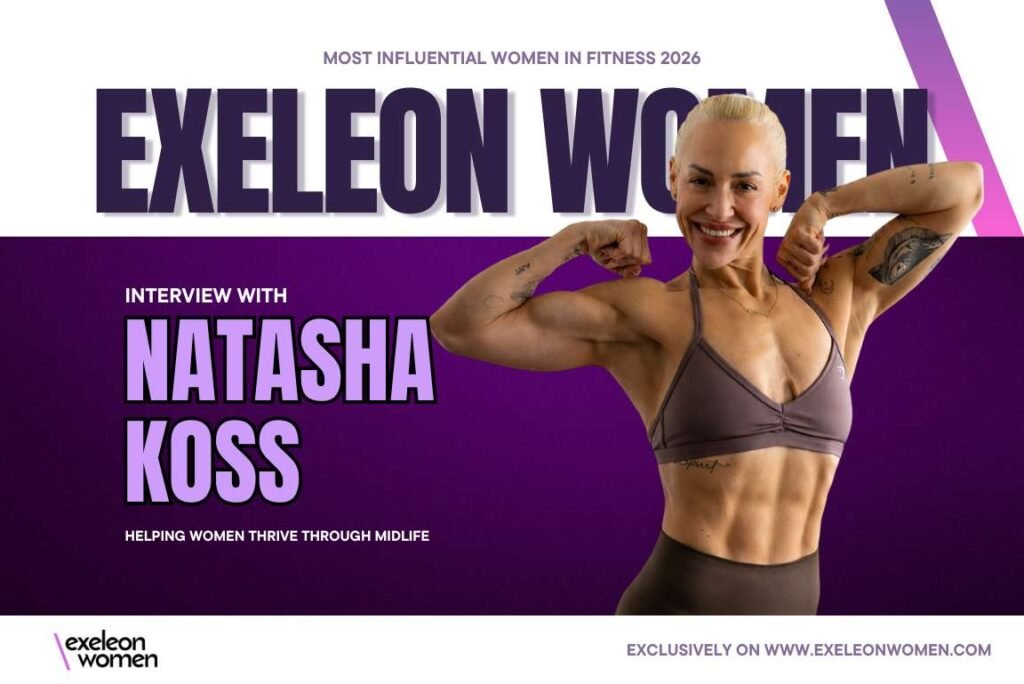
Midlife is often portrayed as a period of decline for women, but Natasha Koss believes it can become one of the most empowering chapters of life. Through her message of strength, nervous system healing, and sustainable wellness, she encourages women to stop shrinking themselves and instead build bodies and lives rooted in resilience, longevity, and self-worth.
In this conversation, Natasha opens up about the realities of hormonal change, the deep connection between emotional healing and physical health, and why modern women must prioritize strength over outdated ideals of thinness.
How should women approach fitness and wellness during midlife, especially while navigating hormonal changes and menopause?
In midlife, a woman is dealing with the “big change,” meaning her hormones are declining rapidly and fluctuating significantly. She is also losing muscle mass and dealing with any number of perimenopause and menopause symptoms such as mood swings, sleep interruptions, and weight gain, just to name a few.
As far as lifestyle goes, this is a time to work smarter, not harder. A good training program that prioritizes strength training, combined with healthy eating and plenty of rest in between, becomes crucial.
You speak often about healing the mind, body, and soul together. Why is the mind-body connection so important in overall wellness?
To ensure healing of the mind, body, and soul, I speak a lot about the mind-body connection.
Meaning, if you do not fix what is setting off your nervous system, whether it is anything from childhood trauma and divorce to losing a parent, whatever it might be, if you don’t first heal what is troubling you on the inside, that trauma response can keep you sick no matter how many dumbbells you lift in a day.
What does your strategy for building a strong and healthy physique in midlife look like?
The strategy for a strong physique in midlife has three important components:
- A functional training program that integrates strength training, moderate cardio, and stretching.
- Healthy eating: carbs for energy, protein to build muscle, and healthy fats for hormone regulation. This is not the time in life to fad diet or remove entire food groups. Protecting our muscles, bones, and hormones should be our priority in midlife.
- Nervous system regulation: By midlife, hormone imbalances can cause a heightened sense of anxiety and possibly even depression. So now, more than ever, learning to calm the nervous system through fitness, meditation, mindfulness, breath work, and similar practices becomes part of the strategy because I truly believe, and have lived the truth, that it’s a healthy mind that builds a healthy body.
Your message “She Outgrew the Chaos” resonates deeply with many women. What inspired that philosophy?
“She Outgrew the Chaos” is so very powerful to a woman who has walked through many difficult and challenging obstacles only to find herself again.
When my daughter was diagnosed with cancer, it felt like going to war, and the battle was to save her life. Once she went into remission, I was diagnosed with PTSD.
At that point, I had a choice: medicate or find an alternative solution to heal my internal struggles. I started running outdoors, and every day after my run, I felt so much better.
That was the beginning of my healing journey. Movement became the single most important thing I could do for myself to help manage my PTSD.
The fitness industry has long promoted unrealistic body standards for women. How do you believe that conversation is changing today?
Women my age were raised on the belief that skinny is best, never pick up heavy weights, and cardio is the only way.
That created an entire generation of women who felt they had to shrink themselves to fit in.
The modern woman is strong, not skinny.
And why choose strong? Because we must think about the long game. The ability to have endurance, strength, and power well into our senior years.
We want to be able to grow old while still maintaining the ability to do all the things that keep our lives fun, exciting, and, most importantly, doable.
What advice would you give to busy mothers who struggle to prioritize their own health and wellness?
Busy moms don’t have much time, that is a fact.
Prioritizing yourself can feel nearly impossible when you are managing a busy household, a career, and children. But here is the hard truth: if you are running your life on empty, then what are you pouring from?
Finding time, even if it’s a 10-minute walk, a 45-minute group fitness class, or a 20-minute YouTube workout, becomes a question of what you prioritize within a 24-hour day.
When you decide that you must fill your own cup at some point during the day, you will find the way.
Create a very powerful and strong “why” for yourself, then watch how the “how” becomes easy.