
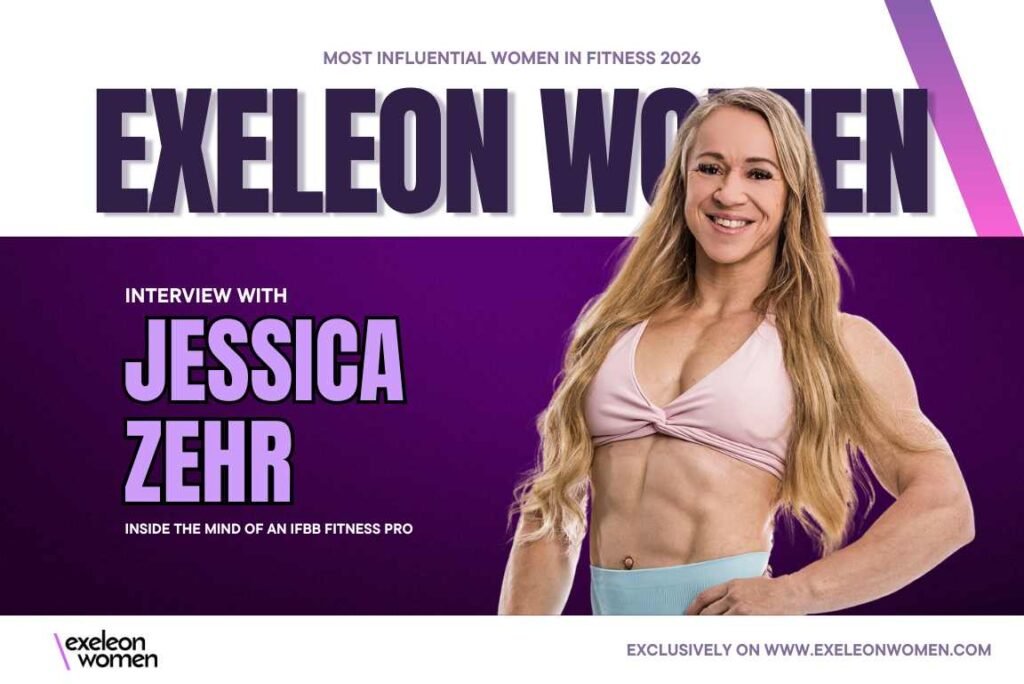
From winning her very first bodybuilding competition to earning her place as an IFBB Fitness Pro, Jessica Zehr has built her journey around discipline, resilience, and continuous evolution. Combining strength, athleticism, gymnastics, and stage performance, she represents a modern generation of athletes redefining what fitness truly means beyond aesthetics alone.
In this exclusive conversation, Jessica reflects on the early moments that sparked her passion for bodybuilding, the mindset required to compete at the highest level, and how balancing recovery, performance, and mental strength has shaped her evolution as an athlete leading into the 2026 Arnold Sports Festival.
What initially sparked your interest in fitness and bodybuilding, and how did that lead you to compete as an IFBB Fitness Pro?
I had always wanted to try competing in a bodybuilding show, so I finally decided to step outside my comfort zone and go for it. I ended up winning my very first show, and from that moment, I was completely hooked.
I’ve always been a natural-born athlete and loved pushing myself physically, so bodybuilding and fitness competition became something I connected with immediately. Over time, I became fascinated with the level of discipline, performance, and artistry the sport requires.
The Fitness division especially stood out to me because it combines physique, strength, gymnastics, and stage performance all in one. That passion eventually led me to earning my IFBB Fitness Pro status.
Can you walk us through your very first competition experience and what you learned from it?
My first competition experience was exciting, emotional, and unforgettable. Walking into that environment for the first time was a mix of nerves and adrenaline, but once I stepped on stage, I knew I loved it.
Winning my first show made me want to do it all over again and confirmed that this was something I truly wanted to pursue. Being a natural-born athlete helped me adapt quickly to the competitive side of the sport, but I also learned that bodybuilding is about much more than just training hard.
I learned the importance of posing, discipline, consistency, recovery, and mental strength. That first experience taught me that growth in this sport happens both physically and mentally.
How has your training and nutrition approach evolved from when you started until now, especially leading into the 2026 Arnold Sports Festival?
When I first started, I thought more was always better: more cardio, more training, more restriction.
Over the years, I’ve learned that smarter training and recovery create better results. My approach now is much more strategic and performance-focused. Leading into the 2026 Arnold Sports Festival, my training balances muscle detail with athletic performance for the fitness routine.
Nutrition is highly structured, but it’s also individualized based on performance, recovery, and stage conditioning. I pay much closer attention now to sleep, stress management, mobility work, and recovery tools because those things make a massive difference at the elite level.
What has been your biggest challenge or setback in your fitness journey, and how did you overcome it?
One of the biggest challenges has been balancing the physical demands of the sport while staying mentally resilient during difficult phases of prep or setbacks.
There are moments where progress feels slow, injuries happen, or self-doubt creeps in. What helped me overcome those moments was focusing on discipline over emotion. I stopped relying on motivation and started trusting my daily habits.
I also learned to celebrate small wins because success in bodybuilding and fitness is built one step at a time.
What does a typical training week look like for you right now in terms of workouts, cardio, and recovery?
Right now, my weeks are very structured.
I train with a combination of heavy strength work, hypertrophy-focused sessions, and gymnastics-specific conditioning for my routine. My split usually includes lower body, back, shoulders, chest, and performance-based work throughout the week.
I also practice handstands, presses, flexibility, and routine endurance regularly. Cardio varies depending on prep, but it’s programmed carefully around recovery and performance output.
Recovery is also a huge priority for me now. Mobility work, stretching, sleep, hydration, and recovery sessions are all part of the process.
How do you balance your life outside the gym with the demands of being an Olympian-level athlete?
Balance is definitely one of the hardest parts of competing at this level.
Being an Olympian-level athlete requires structure and sacrifice, but I’ve learned that creating routines and managing my time intentionally makes everything more sustainable.
I prioritize what matters most each day and try to stay fully present in whatever I’m doing, whether that’s training, work, family time, or recovery.
Having a strong support system also makes a huge difference because this sport truly takes a team.
What advice would you give to women who want to start their own fitness journey or step on stage for the first time?
Start before you feel ready.
Confidence is built through action, not waiting for the “perfect” moment. Focus on building healthy habits first and understand that progress takes time. Don’t compare your beginning to someone else’s years of experience.
If competing is your goal, enjoy the process of becoming stronger mentally and physically because that transformation matters more than any trophy.
Most importantly, believe that you are capable of more than you think.
How important are gymnastics and performance in the Fitness division?
Gymnastics and performance are what make the Fitness division so unique.
It’s not only about physique, it’s about athleticism, creativity, strength, flexibility, and stage presence. The routine allows you to express personality while showcasing years of skill development and conditioning.
For me, mastering elements like handstand presses, strength holds, and endurance work has become one of the most rewarding parts of the sport because it constantly pushes me to evolve as an athlete.
Follow Jessica Zehr on Instagram.