
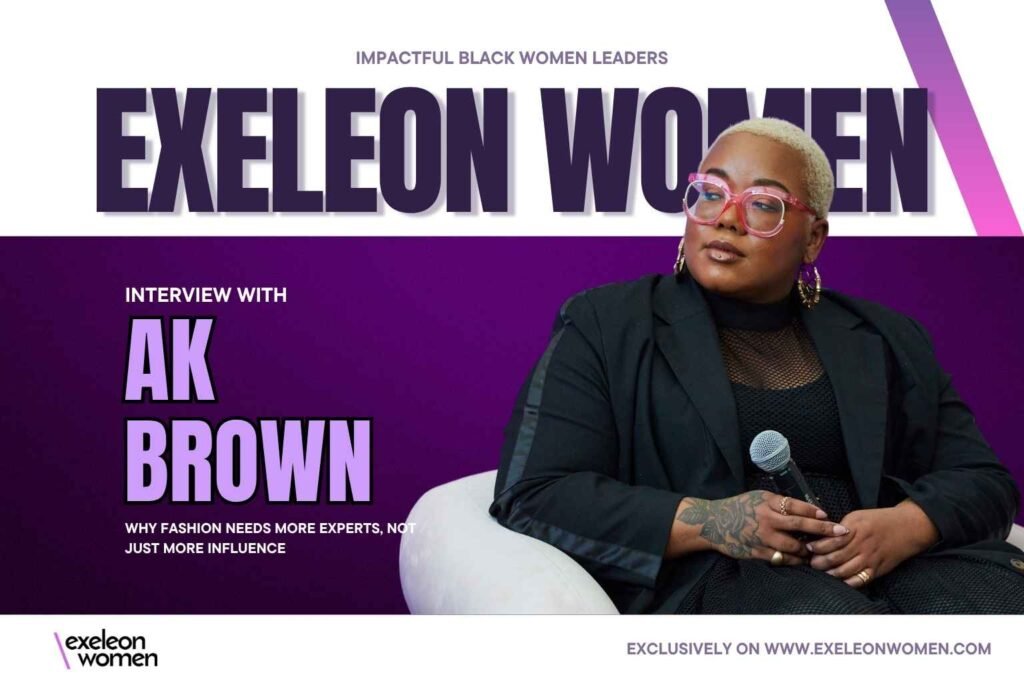
The fashion industry has never lacked visibility. What it increasingly struggles with is separating visibility from expertise.
AK Brown sees an important distinction between the two.
As a fashion entrepreneur, educator, consultant, and industry connector, Brown has watched social media transform how professionals establish credibility. Designers, stylists, strategists, educators, and other specialists are now expected to become content creators simply to remain visible.
But popularity and expertise are not necessarily the same thing.
“We need more experts that can share their knowledge and experience,” Brown says.
It is an idea that captures much of what she is trying to build within fashion: an industry where knowledge, relationships, individuality, and professional experience carry as much weight as follower counts.
Moving Beyond Influencer Culture
Social media has undeniably democratized fashion.
People who once needed access to major publications, agencies, retailers, or established industry networks can now develop audiences independently. For emerging creatives, that accessibility has created opportunities that previous generations did not have.
Brown recognizes its value. What concerns her is what happens when every professional begins feeling pressure to perform as an influencer.
“I believe social media has forced many of us to become the content creators and influencers we don’t want to be,” she explains.
Behind those accounts, she argues, are people with substantial knowledge across specialized areas of fashion.
That expertise deserves an identity of its own.
Brown encourages multifaceted fashion professionals to identify what they genuinely understand, articulate their knowledge, and position themselves as authorities rather than measuring their relevance primarily through social engagement.
It is also a more durable approach to building a career.
Platforms change. Algorithms disappear. Audiences migrate.
Expertise can travel with you.
Fashion Without a Single Rulebook
Brown’s philosophy around professional identity mirrors her philosophy toward fashion itself.
Growing up surrounded by a mother, aunts, and cousins who either shared or encouraged her interest in fashion, the industry felt natural to her. But as her education and career developed, she became increasingly convinced that fashion should not belong to a narrow group of people.
“There’s a way for everyone to participate in fashion and make it their own,” she says.
That belief has shaped her own brand.
Rather than conforming to a predetermined version of what a fashion professional should look like, Brown has built a career across entrepreneurship, consulting, education, publishing, speaking, and community building.
It is less about fitting neatly into one professional category and more about recognizing that modern careers rarely need to.
For aspiring fashion entrepreneurs, that can be liberating.
Finding a niche does not necessarily mean limiting yourself to a single activity. It can mean understanding the common purpose connecting everything you do.
For Brown, that purpose is helping people find their place in fashion.
Leadership Without Fear
The same rejection of conventional rules appears in Brown’s leadership style.
Fashion has long carried a reputation for intimidating personalities and highly competitive environments. Brown has little interest in reproducing that culture simply because previous generations normalized it.
She challenges the assumption that authority requires aggression.
“I refuse to implement scare tactics into my leadership that contribute to the toxicity of the fashion industry we so desperately need to get away from,” she says.
Instead, Brown associates power with authenticity.
She describes herself as empathetic and believes genuine leadership comes from being consistent about what someone says, does, and ultimately delivers.
It is an approach that becomes particularly meaningful in creative industries, where relationships often determine whether talent receives an opportunity at all.
People may remember impressive work.
They also remember how someone made collaboration feel.
Building Beyond Your Own Market
Brown has learned another important lesson about relationships through experience.
If she could change one thing about the early stages of her entrepreneurial journey, she says she would have expanded beyond St. Louis sooner.
Her commitment to showcasing the city’s fashion community remains central to her work. But early in her career, fear prevented her from traveling and forming as many outside relationships as she now believes would have benefited her larger ambitions.
The lesson is particularly relevant for entrepreneurs trying to build strong local brands.
Supporting a home market and expanding beyond it are not conflicting goals.
External relationships can bring greater visibility back to local communities, introduce new resources, and create collaborations that otherwise would not exist.
Sometimes growing an ecosystem means connecting it to another one.
Preparing Fashion for What Comes Next
Brown’s emphasis on expertise also shapes how she views fashion’s future.
She expects sustainability to become increasingly difficult for the industry to treat as optional, particularly as regulation creates greater accountability around how cheaply and quickly products can be produced.
Technology will create a different kind of disruption.
Artificial intelligence and digital environments are already changing how consumers experience clothing, while emerging production methods could offer designers alternatives to traditional manufacturing.
For Brown, these shifts circle back to something she has believed throughout her career: fashion should create more ways for people to participate.
The professionals who thrive in that future may not simply be those who generate the most attention.
They will be people who understand their craft deeply enough to adapt when the mechanisms of attention change.
Credibility That Outlives the Platform
Brown still intends to grow her studio brand and nonprofit while continuing her work across fashion.
But perhaps the more interesting part of her contribution is the model she offers other professionals.
Build relationships beyond your immediate circle.
Develop an identity that reflects who you actually are.
Reject leadership styles that require intimidation.
Share what you genuinely know.
And do not confuse being seen with being valuable.
Fashion will always need people who create attention.
AK Brown is making the case that it needs something even more enduring: people whose expertise remains relevant after the attention moves somewhere else.
Read Her Full Interview on Exeleon: AK Brown: Meet The Fashion Connector
Also Read: Women Entrepreneurs in Fashion Shaping the Future of the Industry