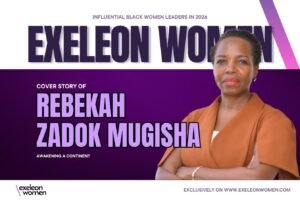

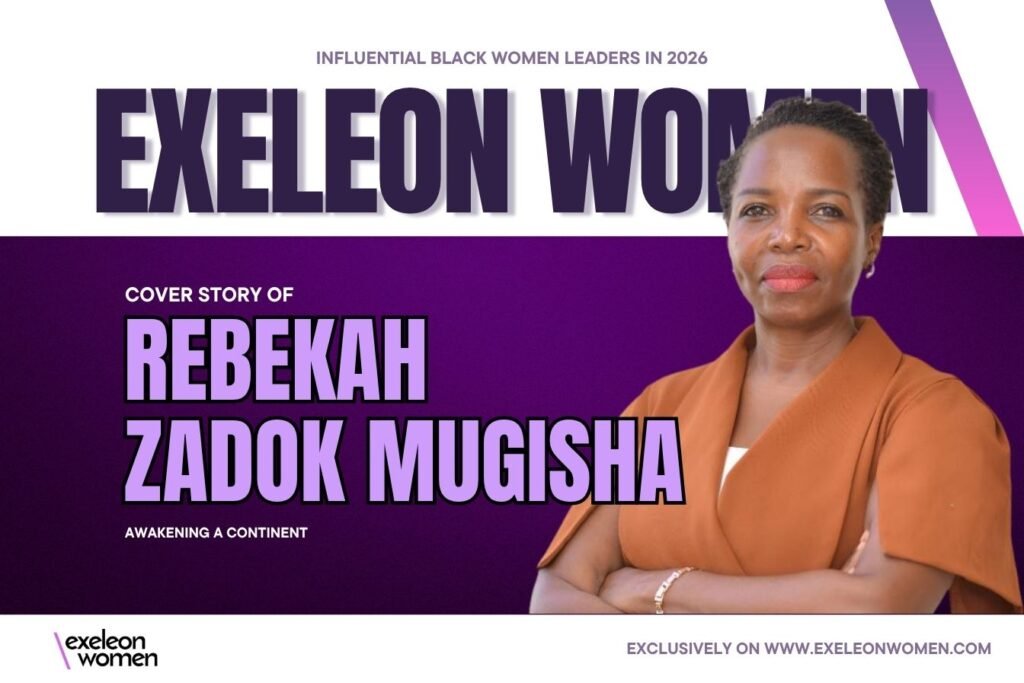
Rebekah Zadok Mugisha has spent more than eighteen years moving through some of the most demanding sectors on the African continent, from telecommunications to aviation, renewable energy to financial services, yet she insists that none of those transitions were ever really about the industries themselves.
“My career has never been about industries; it has always been about people,” she says. Whatever sector she found herself in, one question kept resurfacing: how do institutions create experiences that improve lives? That question became the thread connecting every chapter of her professional life, and it eventually shaped her into one of the continent’s most respected voices on governance, customer experience, and institutional reform.
Each move across industries exposed her to different operating models, cultures, and leadership philosophies, but she noticed the same underlying challenge everywhere she went. “The underlying challenge remained the same, building trust,” she reflects. That realization became the foundation of her passion for customer experience, institutional transformation, and leadership development, and today she views every role she has held as preparation for a larger conversation about how Africa can build institutions that are efficient without losing their humanity.
Leadership as Stewardship
With more than fifteen years of leadership experience behind her, Rebekah has arrived at a philosophy that runs counter to how many executives think about power and position. For her, leadership is not something granted by a title, and it never has been.
“Leadership is stewardship rather than authority,” she says. “Titles may grant responsibility, but influence is earned through consistency, integrity, and the ability to develop others.” That commitment to stewardship and disciplined leadership has shaped Rebekah’s contribution across several governance roles. She currently serves as an Independent Audit Committee Member at Sanlam Allianz Uganda, Chair of the CXPA Africa Council, a member of the Advisory Council of the Africa CX Leaders Forum (ACXLF), and Chair of the ACXLF Citizen Experience Commission, where she works with leaders across the continent to advance customer and citizen experience through collaboration, thought leadership, and professional practice.
Governance, in her view, should never be reduced to a checklist of compliance requirements. “Good governance creates confidence, sustainability, and better outcomes for citizens and customers alike,” she explains. Years of leading large teams and driving transformation programs have reinforced a conviction she returns to often: organizations thrive when their leaders stay curious, accountable, and willing to listen, and the best of them build environments where people can contribute meaningfully rather than simply follow instructions.
A Movement Born From a Personal Conviction
Beyond her executive and advisory roles, Rebekah co-founded Malaika Path, a pan-African movement designed to awaken what she describes as the continent’s critical, collaborative, and creative consciousness. The idea did not emerge from a market analysis or a strategic plan. It came from something far more personal.
“Malaika Path was born from a deeply personal conviction,” she says. Throughout her own career, she noticed that many of the lessons that shaped her growth, resilience, and leadership had never been taught in a classroom. They came instead from difficult conversations, failures, mentors, and moments of intentional reflection, the kind of experiences that formal education rarely makes room for. Millions of young Africans, she realized, complete their schooling without ever encountering those transformative lessons.
That gap became the question at the center of Malaika Path. “What if we intentionally created spaces where people could learn what truly works in life and leadership?” she asked herself. “What if we documented practical wisdom, distilled successful experiences, and made them accessible to anyone willing to learn?” The platform exists to answer that question, built on the conviction that Africa’s greatest challenge is not a shortage of talent, but a shortage of deliberate spaces for learning beyond the formal classroom.
Across the continent, she points out, millions of young people finish school without ever having the conversations that shape judgment, critical thinking, creativity, collaboration, and responsible leadership. Malaika Path was built to close that gap. “We wanted to build a platform that awakens minds rather than simply transfers knowledge,” she says, and its ambitions stretch well beyond employability alone. She believes Africa’s future will belong to citizens who continually learn, unlearn, and relearn as the world shifts around them, and Malaika Path exists to provoke the kind of thoughtful conversations that nurture a generation capable of designing African solutions for African realities.
Rethinking What Makes an Institution Future-Ready
Through her governance and advisory work, Rebekah has become a vocal advocate for a fundamental shift in how African institutions measure their own success. Activity, she argues, is not the same thing as impact, and organizations that confuse the two will struggle to remain relevant.
“African institutions must move beyond measuring activity to measuring impact,” she says. Future-ready organizations, in her view, place citizens and customers at the centre of every decision rather than treating service as an afterthought bolted onto existing operations. Technology, however sophisticated, will not transform an institution on its own. “Technology alone will not transform institutions unless accompanied by cultural transformation,” she explains, arguing that boards and executives must invest as heavily in governance, leadership capability, ethics, and human-centered design as they do in new systems and platforms.
The institutions built to last, she believes, are the ones willing to keep learning. “Organizations that continuously learn, adapt, and build trust with their stakeholders will remain resilient,” she says, while those that lean entirely on past success risk becoming irrelevant as the environment around them changes faster than their institutional habits can keep up.
Carrying the Weight of Representation
As one of the continent’s prominent women in governance and executive leadership, Rebekah is candid about the responsibility that comes with visibility. She does not treat her position as simply a personal achievement.
“Visibility carries responsibility,” she says. “Every woman who occupies a leadership position expands what is imaginable for the next generation.” For her, legacy is measured not by the roles a person accumulates, but by the doors they open for others along the way. Mentorship, sponsorship, and honest storytelling matter deeply to her because they normalize women’s leadership and give young professionals a version of themselves to look up to, something many never had growing up.
“I hope my journey demonstrates that excellence and purpose can coexist,” she says, “and that African women belong not only in leadership conversations but at the tables where decisions shaping the continent are made.” It is a quietly ambitious statement, one built less on rhetoric than on the accumulated weight of nearly two decades spent proving it through her own work.
Advice for the Next Generation
When asked what she would tell young African professionals hoping to lead with both purpose and impact, Rebekah’s answer is direct and largely unconcerned with the usual career advice about networking or credentials.
“Invest in your mind before investing in your career,” she says. “Read widely, think deeply, ask difficult questions, and remain teachable.” She is equally blunt about the trade-off between ambition and character. “Do not chase titles at the expense of character,” she warns. “Competence may open doors, but integrity sustains influence.” At the centre of her advice sits a conviction she returns to often: leadership is service, and the people who leave a lasting mark are the ones who commit themselves to solving problems larger than their own careers. “Africa needs thoughtful builders more than it needs celebrated personalities,” she says.
A Vision for What Comes Next
Looking ahead, Rebekah’s ambitions for Malaika Path extend far beyond any single program or initiative. She describes her long-term vision in almost generational terms, a slow, deliberate reshaping of how an entire continent thinks.
“My long-term vision for Malaika Path is to awaken the thinking of Africa, one mind, one conversation, and one community at a time,” she says. She does not believe lasting transformation begins with policy or institutions alone. It begins with how people think, and every individual who learns to think critically carries the potential to influence others, creating a ripple effect that moves through families, workplaces, and communities until it eventually reshapes society itself.
At Malaika Path, that mission takes the shape of documenting wisdom, facilitating meaningful conversations, and inspiring the kind of lifelong learning that equips Africans to become thoughtful leaders, innovators, and changemakers in their own right. “When individuals transform their thinking, they transform their environments,” she says, “and when enough minds change, nations change.”
Beyond the skills and frameworks, Rebekah hopes to help raise a generation defined by wisdom, courage, integrity, and responsibility, one capable of building the stronger institutions and more resilient societies that transformation from within requires. Her life’s work, as she describes it, is ultimately about something larger than any title or boardroom seat: an Africa where learning becomes a way of life, where every individual recognizes their own power to shape the future, and where leadership is measured not by how much power a person accumulates, but by how many lives they transform along the way.
Connect with Rebekah Mugisha on LinkedIn
learn more about Malaika Path
Read Digital Version of this Issue.
Co-founder of Malaika Path